

2025: The Year Courage Chose Me
In this episode, Ayana Fakhir reflects on the theme of courage throughout 2025, emphasizing that true courage involves facing truths and embracing imagination. She shares personal stories of how courage became more than just a word, evolving into a rhythm and a way of being. Ayana highlights that courage is not a solitary act but a relational and collective practice, urging listeners to find courage in truth and imagination as they move forward.


In this episode, Ayana reflects on the theme of courage throughout 2025, a nearly quiet revolution. Ayana emphasizes that true courage involves facing truths and embracing imagination. She shares personal stories of how courage became more than just a word, evolving into a rhythm and a way of being. Ayana highlights that courage is not a solitary act but a relational and collective practice, urging listeners to find courage in truth and imagination as they move forward.
Onward into 2026! Happy New Year!
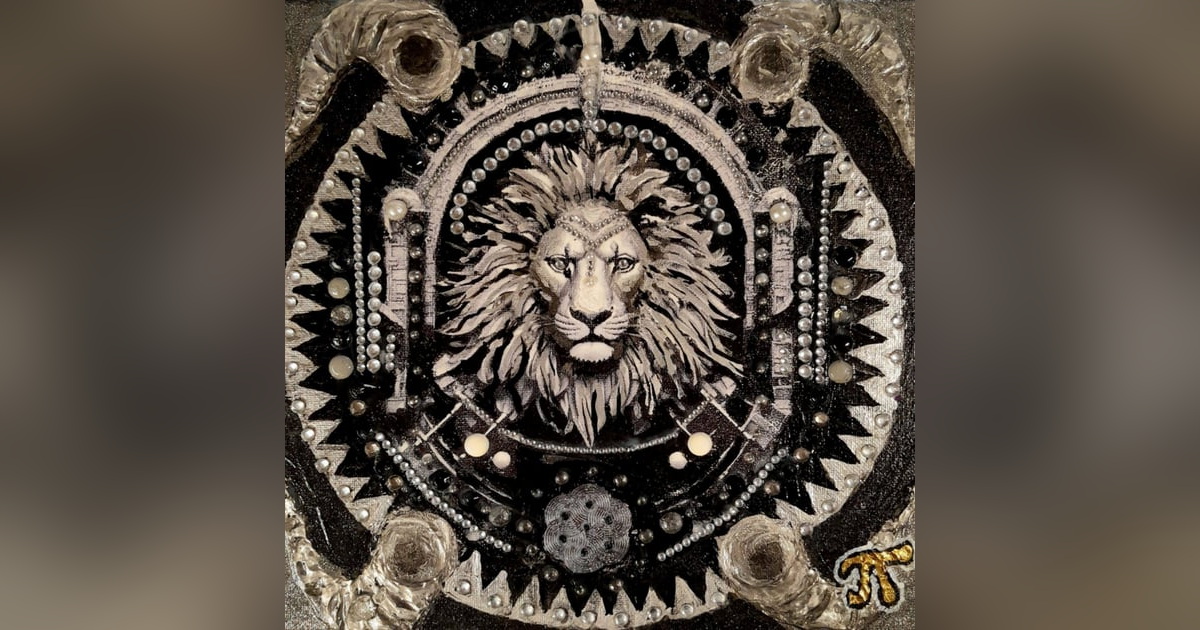
"Roar" original artwork by Jarrett Terrill
Join the conversation by leaving a comment for the show on our social media pages!
I was just on social media. When am I off of social media? Come on now, Ayana But I was reading through my feed and came across a hashtag of what, you know, what, was something like, what did you achieve, some great thing you achieved this year? That is 2025. And there are people saying, you know, and God bless them, they survived cancer.
they found housing. They got a car. They got a job. They started a business. They got divorced, got married, had a baby when they thought they would never have another child. And it's like, it's amazing. All of these amazing things, big things, right? Those are great things.
For me, what's something great I achieved this year? I was the most courageous I have ever been in my entire life.
There are moments in life that don't announce themselves as turning points. They don't arrive with thunder or revelation. They don't come wrapped in clarity. Sometimes they slip in quietly, you know, like a draft under a door or a whisper you almost mistake for your own breath.
For me, the conclusion that this year was the most courageous I had ever been and that courage would be my word for...
2025 came just on an ordinary day,
I was going over a list of words in my head. Like, what would I use to describe this year?
And at first only very naughty ones came to mind, you know, the F word because this year, ooh, 2025. Oh my gosh.
No soft words came to mind at first. Not words that felt like balm after a year that had stretched me thin in ways I didn't fully admit until much later. Only harsh words came to mind. As harsh and as cold as the
Windows on my home in winter this house was built in the 1920s and When I tell you those windows can get frosty But I thought you know what I'd rather have one word that would hold me gently a word that would let me exhale
I wanted a word that would let me step into the new year without bracing for impact.
Courage is that word. And It's not something I made up.
Courage is not a word you choose. Courage is a word that chooses you.
I've got some explaining to do. Let's get into it.
Welcome back everyone. Hey, it's me Ayana Fakir, your black Muslim lady lawyer who has an opinion on everything, And I do mean everything. If you have been with me from the beginning, you know I ain't lying. I ain't lying. And if you follow me on social media, you also know that I ain't lying. I will talk about any...
Ayana Explains It All is the podcast bridging the gap between current events and human behavior. It is available on multiple streaming platforms and if you go to our website www.ayanaexplainsitall.com you can find links to all of the shows, places, shows, all of the episodes, the transcripts, descriptions, show notes, a blog that I haven't updated in a minute. I'm so sorry.
information on how to support me, how to support the podcast, how to collaborate with me, how to, you know, you can leave a review, leave, you know, stars, four stars, five stars, whatever the case, but mostly the podcast is available on our flagship Spotify. You can go there and you can, because I know all y'all got Spotify. I know all of y'all. I saw all of the countdowns. look at my songs of the year. Most listened to artists. So I know you guys got Spotify. Go over to Spotify.
Find Ayanna Explains It All, that is A-Y-A-N-A, explains it all, and subscribe. Yes, sign up for me and my podcast. What else? Again, go to the website, www.ayannacplainsitall.com, that's A-Y-A-N-A, explainsitall.com. For all things podcasts, you can follow me personally on social media, Ayanna R. Fakir. Yes, that is my real name. I know, it sounds so strange.
But when you see me in the hijab, it's not so strange. Like, you're one of them. You're one of the Muslims with names with all them consonants. But yes, follow me on social media. I'm on Facebook. I'm on X. I'm on threads. I'm on Blue Sky. I'm on, I'm even on Lemonade for some reason. I'm on TikTok.
I'm also on, what's the other one? Instagram. Yes, I am there. The show is also there too. The show is wherever I am. I always post a little snippet of the podcast episode to get you warmed up.
get you warmed up to listen and to remind you to listen, you know, you don't have to wait for a special occasion. I know some of you like, I'm going to listen to a podcast while I'm driving across the country. Just put it on, put it on while you're,
cooking and cleaning and bonding and driving and walking and talking and writing and whatever it is you do.
put on my podcast specifically, Ayanna Explains It All. This is season four. This is the end of season four, which to my disappointment was not as long a season as I wanted it to be. But I did, I told you guys, I got into some new things this year. I made friends with this group of politics people over on TikTok and we're doing this thing called Our Vote Counts, this ⁓ group.
called Our Vote Counts, a nonpartisan movement, uniting Americans from all walks of life to educate voters and to support candidates of integrity. That's actually our tagline. But we've been interviewing, doing town halls on TikTok live. Town halls, interviewing, questioning, roasting over the coals, grassroots candidates who are running for every office you can imagine.
from school board to US Senate to state Senate to the House of Representatives to County Commissioner. I mean, we have talked to so many people from all over the country, from Oregon to Florida to ⁓ New Jersey, Ohio, Tennessee. We've been everywhere, right? And if you know someone who's running for office, who would like to be featured on our TikTok Live Town Hall, it's free. Yeah.
It's free. get an hour and a half to present your platform, tell people about your vision for whatever you're running for. If it's for a city or a county or a state or the country, you're welcome to do that. We don't, we don't pull any shenanigans. It'll be either me or one of my other team members moderating. And it's a good time. It's a good time. So if you're on TikTok, look up our vote counts. We're going into the midterms. A lot of people were running in these primaries.
a lot of people because every seat in the House of US House of Representatives is open. But there are also people running for mayoral offices, city council, school boards, et cetera, et cetera. Hey, send them over to our boat counts and we'll get them set up so that they can present their platform. I understand running for office is extremely expensive in the United States. And if you don't have the backing of generous donors, generous donors,
And if you're grassroots, you probably don't. If you're not independently wealthy, you probably don't. And so you need as many opportunities to do, you know, to get a free exposure, get your name out there as possible. We do that. We help you. We help you do that. We do it all for free because we, we are engaged in this democracy, in this civics, this civic republic, democratic republic. And we want to see people do well.
We want to see people succeed when they're out there playing this political game. We want to see candidates who are for progress moving this country forward on whatever level that is. That's what we want to see. And we know that a lot of people are just coming out of their chair, out of their chair, wherever they are at their job. And they're like, I'm running for office. And let me tell you, that takes courage.
That takes courage because you will face things you have never faced before. Like I have talked to multiple candidates and listening to the stories of, you know, the things that have come their way while they're out on the trail, while they're talking to people, watching them, watching their videos, watching their campaign videos, listening to their backstories. All of these people are so interesting, my goodness. But it takes courage to do what they are doing.
And courage, courage is my word of the year for 2025. This is just the second year that I'm doing this. Last year in 2024, my word was resilience because we listen. Go back and listen to that episode on resilience. I'm very, very proud of that episode. I talked about how the expectation to bounce back, but also how we need to bounce back, but also how we can bounce back against
what people expect from us and bouncing back. Like it doesn't have to look like anything, right? It doesn't have to look like anything, but we have to be resilient because life is going to keep throwing things at us and we're going to have to learn how to ⁓ hit that ball out of the park. Life is going to keep throwing the pitches and we're going to have to keep swinging the bat. So.
My word this year for 2025 is courage. You know, not the Hollywood version, not the fearless hero narrative. I'm talking about, for me, the quieter, messier, deeply human courage that shows up in our choices, our boundaries, our relationships, and our movements.
The kind of courage that doesn't always roar, sometimes it whispers, try again.
I didn't want that word for this year. I wanted a different word, an F-U-C-K word. I wanted a tough word because this year, 2025, was tough. It was tough. But I needed that word. I didn't just need the word. I needed the behavior, the feeling, the action.
And that's the thing about courage. It rarely arrives when you're feeling ready. It arrives when something in you, when something in us knows we can't keep living the way we've been living. It arrives when the gap between who we are and who we're becoming grows too wide to ignore. It arrives
when the truth we've been avoiding finally demands a witness. Courage is a summons, a threshold, a quiet revolution. And in 2025, courage helped me rise to the occasions that met me trembling and with trepidation. And maybe you've had a moment like that, a moment when
something inside you said, this is the year you stop pretending. This is the year you stop shrinking. This is the year you step into yourself. If so, hey, you're not alone. I'm right there with you.
Think about this. How did courage show up for you? Maybe it was in the courage to tell the truth this year. There is a particular kind of heaviness that comes from holding a truth you're not ready to speak. It sits in the body, in the jaw, in the chest, in the space between the ribs. It hums beneath conversations.
beneath decisions, beneath the quiet moments when you finally stop moving long enough to hear yourself think. Truth has weight and silence has a cost. I learned this slowly over years, years of shrinking myself in small, almost imperceptible ways. Not because I wanted to lie,
but because I wanted to be liked, because I wanted to be understood, because I wanted to avoid conflict. The feeling of invisibility loomed over me often, though I don't desire to be the center of attention. I do long to be understood. I long to be heard.
We are taught, especially women, especially black women, to be agreeable, to be accommodating, to be the ones who smooth the edges, who hold the tension, who absorb the discomfort so others don't have to. I remember reading about that in the book Hood Feminism, which I love. I read that this year.
We learn to read the emotional temperature of a space before we even enter it. We learn to anticipate needs before they're spoken. We learn to swallow our own truths in the name of harmony. But harmony built on silence is not harmony. It is self-eraser. And I felt erased in many facets of my life, in my job,
in my home, in some friendships, some connections, in my family.
Courage, real courage, requires truth. There was a moment this year that I, it still sits with me. Still sits with me. I was in a meeting, a work meeting. One of those, come on everybody, let's get together and talk about this training that we received. Let's unpack this training that we received.
And it's just one of those meetings where people just want to, okay, let's just get this over with so we can get back to our work day. Don't anybody ask any questions at the end. And everyone's just kind of nodding along.
going, mm-hmm, in agreement, pretending we're all aligned, pretending, you know, the things that we're hearing from management isn't ⁓ inaccurate about the work that we do, pretending that we are all satisfied with what's happening here. And then I felt that familiar pressure in my chest.
the truth rising like a tide. I knew what needed to be said. I knew the direction they were taking this in wasn't right. And I knew silence would cost more than honesty. I also knew that no one else was going to say the thing that I was thinking because people feel as if
They are not there to be supported. They are there only to work and collect a paycheck and do it five days a week, six days a week. But there's something about being a professional that requires you to speak up when your work is not respected or valued or when you feel that it isn't because the people who read it, who expect it don't treat you
or treat it as if it is valued. And I told myself in that meeting, today, this meeting, this moment is when I would call out the thing, is when I would name the thing.
And afterwards, people messaged me and said, yes, thank you for saying that. Thank you for stepping up to this day. And this happened back in September. It was December and we were all gathered for an end of the year party in the office. And people were like, yeah, thank you for saying what you said. Thank you. I appreciate that. Thank you. Even after the meeting, I felt that quiet ache, the one that comes when you
Betray yourself in the name of keeping the peace. felt that ache disappear Even if you know, I I know sometimes that We're told don't worry about this thing or that thing just produce just produce Even though I know they want us to just produce there are things they need to hear That affect how we are able to produce
I don't care when you tell me, they don't care about that, Ayanna. They don't care. They don't care. They don't care. That's fine that they don't care. But you're still going to have it on record that this is a problem, or this is what's happening, or this is what our needs are. You're still going to have it on record. Somebody has to say the thing.
And that person was me. That person was me a lot this year. That person was me. I was called on to be the person that had to say the thing that other people were afraid to say. I am now often called on to say the thing that needs to be said that other people don't say. It's so, it's gotten so deep that there are times when I absolutely refuse because by now you should know, you should know and you should be saying it.
that I withdraw from some spaces because I know I'm expected to be the one who will say the thing, who will tell the truth. Who will tell the truth?
And people will text me and call me and go, Ayanna, please come back. Please, please. We need you over here. We need you in this space. We need you online. We need you to, Ayanna, look at this. Please say something. And I am tired. I'm tired of being the only one sometimes who's telling the truth, even if it makes me look stupid, even if it makes people around me look stupid, even if it is uncomfortable to people.
We have to be telling the truth. And yeah, sometimes the truth does not always need to be spoken. And people are finding that out. Sometimes the truth doesn't even make a difference to people who are listening.
But when it makes a difference to you, when it would make a difference to you, when it would make a difference to a situation, when you know that it will change a moment, when it will make something better, when it will remove a veil of suspicion or a veil of delusion, or when it will just clear the air, please clear it. Clear them people, honey.
This year, courage asked me to face truths and speak them. Truth telling has always been a catalyst for change. Movements don't begin with policy proposals or strategic plans as I am learning in my journey on this political road that I am on. They begin with someone saying, this particular thing, this particular way of doing something isn't working.
So I'm gonna run for office and I'm gonna do it a different way. These movements begin with someone refusing to pretend. They begin with someone naming what others have been taught to ignore. Truth is disruptive. Truth is inconvenient. Truth is dangerous to systems built on denial. But truth is also liberating every major shift in our political landscape.
every reform, every uprising, every cultural reckoning, all of these things I've read about in the books that I've read this year, and I've read some really great books this year. I read Half American, I read...
How Democracies Die, I read The Founding Myth, some really great books this year.
Every major shift in our political landscape began with someone choosing truth over comfort. Someone who refused to shrink. Someone who refused to perform. Someone who refused to carry the weight of silence any longer. They were liberated by truth.
Truth-telling. Truth-telling is not just personal courage. It is political courage.
And once truth begins to ripple, systems begin to shake. And we are going to need this in 2026. We are going to need truth telling in 2026. We are going to need disruption, inconvenience. We are going to need to no longer, to no longer pacify the dangerous systems that are built on denial, the one we are currently sitting on.
If you look at what's going on in the news, and I've talked a lot about that this year, a lot about what's happening in our political landscape, in voting, in work, in personal relationships.
how people just flat out deny the truth, flat out. It'll be staring them in their faces. And they go, no, no, no, no, no, no, no, no, no, no, no, no, no.
In order to change, order to progress, truth number one has to matter, But it has to also be spoken and heard.
And once truth begins to ripple, systems begin to shake.
So let me ask you, where are you holding a truth that's ready to be spoken?
In 2025, yourself in a situation, a conversation with a loved one, a work meeting, a political rally town hall or something where you found yourself swallowing your truth, avoiding rocking the boat, tiptoeing around the truth, and then you finally said it. Your voice may have been shaking. Your hands may have been trembling. Your heart may have been racing, but you said it. And guess what?
The world didn't end. In fact, another room in your life opened. That's the thing about truth. It feels like a risk, but it's actually a release. Truth clears the air. Truth resets the room. Truth makes space for what's real. And in that moment, in that moment when you are telling the truth,
you realize something you should have known all along.
that courage is not the absence of fear. Courage is the decision that truth matters more.
Now.
What if you found courage in imagination? I am a neurodivergent brained person. And so I spend a lot of time in my imagination inside of my head, in my creative space inside of me. I have to do that to do this podcast. I have to do that to do a lot of my hobbies. I have to do that to come up with how I want to arrange my plants.
or in my garden when I get to have a garden when it's not freezing outside in Northeast Ohio.
There is a moment, small, almost forgettable, that keeps returning to me when I think about courage, and that is the use of imagination.
So imagine you're walking through your neighborhood and you're just minding your business, got your headphones on, your music is playing, and your mind is just, everything's running through your mind. Daily tasks, deadlines, your next event, your next this or that thing, what you need to produce.
Maybe you're thinking about the year ahead. Maybe you're, you know, just humming along. And then you see a group of kids, like kids around in my neighborhood, they like to draw on the sidewalk with chalk. Adults like to do it too, right? And they're just drawing anything. They're drawing, you know, a dragon curled around a ⁓ skyscraper or a spaceship.
or a political message or clouds or a sun.
They don't draw what they see necessarily. They draw what they want to see.
They draw what they want to see.
And in that, you think about that, right?
When did we stop?
Dreaming.
When did we stop dreaming? When did we trade our imagination for...
realism.
Like I know we have to be grounded in reality about things. We have to see people for who they really are. We have to see situations for what they really are. We have to live in reality.
But part of that living in reality is seeing possibilities, not like you could erase what something is and make it into something else. No, you could progress. You could move on. You could move along. You could...
Move ahead.
As a kid, I, and as an adult, like I said, I lived in my head. Lived in my head, building worlds, inventing characters, dreaming futures that felt bigger than the one I was handed. I didn't question whether my ideas were realistic. I didn't shrink them to fit inside the expectation of others. I just went for them. I didn't worry about whether they made sense. I just went for them.
Did they always work out? No. No. But somewhere along that journey, somewhere along that journey, somewhere between growing up and growing through and growing cautious, I learned to edit my imagination before it even had a chance to breathe because I got bogged down with being responsible.
And so I learned to dream responsibly. One of the things that I learned this year through my personal study...
I learned to think about God as being bigger than anything I've ever imagined. I learned to not shrink God or shrink His ability to deliver for me and for my life, for my children. I had always thought that, well, I should, you know, when I pray, I should ask God for something that makes sense, right?
I shouldn't ask him for a billion dollars because why does that make sense? And I would see these videos and people would say, be delusional in your prayers. And I thought, sounds silly. you don't want to, you don't want to go, Hey God, can I get a castle?
And then I thought about it like, well, either he's gonna give it to you or he's not, or he's gonna give you something that's more appropriate for your circumstances, your situation, or that makes sense for you.
He's gonna let you dream big and think big and treat him like he's big because he is. And then he's gonna give you, he's gonna give you something that's big for you. That's big for you. He's gonna give you something that's big for you. It wouldn't make sense to have a castle like in Shaker Heights, Ohio on the street that I live on.
So maybe when I ask for a castle, he gives me a house that for me is my castle. Right?
That was something that I had lost all of these years before now. The ability to dream.
BIG
so responsible, so careful, thinking about everything so carefully, you know, because I have kids and I'm a lawyer and I don't want to, I don't want to, I don't want to step outside of things, you know, I don't want to, I don't want to jeopardize things for myself or for my children. I don't want to, I don't want to...
I don't want to use my imagination to create a life for myself that's bigger than the life that I have because, you know, this life, this life, and I learned this year, it's not what everybody thinks I should have by now, but it's safe. It's safe and it's comfortable and it's fine and masha'Allah, ⁓ you know. Why would I want something bigger? Why would I want something else? Why would I want...
different job, different house, a different car, different, you know, why would I want to get married again? Why would I want, you know, this or that thing? I should just be satisfied. I should be satisfied. I hear that a lot. Be satisfied with what you have. Don't try to, you know, you got a good gig there. Be satisfied with it.
For years, I've just been plodding along, very satisfied. And this year, something happened that I, I mean, that showed me that maybe the comfortable safeness of my life is not as comfortable and safe as I thought. Right? Like that government shutdown for over 40 days really opened my eyes about how I've just been limiting myself.
to this one thing and doing this one thing for the last 20 plus years and just kind of living this safe, comfortable, suburban life.
When I was a child, I dreamed so big and wild and crazy and I was doing things. I was doing, was, you know, I used to build things with my hands when I was a kid, you know? I didn't have the dollhouse that I wanted, so I built my own dollhouse out of boxes and scraps and things. And I still do that. I have all of these little miniature dollhouses in my house. I used to do that so much.
so much. And then I got bored with it because it wasn't enough for me. It wasn't enough. I needed something else. But that's just me. I get bored and I need something else, something else to stimulate me. That's the neurodivergent in me.
But at some point I said to myself, you need to just slow down, slow down, temper yourself, just temper yourself.
You know? And that's how imagination dies. Not with a dramatic collapse, but with a quiet narrowing. We stop asking, what if? And then we start asking, what's realistic? We stop imagining what could be, and we start managing what already is. But again,
Just as real courage requires truth, real courage requires imagination. Because imagination is the bridge between the world we have and the world we want. Even in liberation movements, and again, I spent the entire year reading about politics and liberation movements and getting involved with these ⁓ political candidates and...
Every liberation movement in history began with imagination. What these people are doing now began with them imagining the world that they want.
Right? Think about it. Before voting rights for Black people was law, it was imagined by people who had never seen themselves reflected in the political landscape.
before any reform, any uprising, any shift in consciousness, someone imagined something better.
Now when you're a child, you think maybe imagination is escapism, but it is not escapism. When you're an adult, imagination is strategy. It is the first step in building a world that does not yet exist. It is the refusal to be limited by the present. It is the audacity to believe that the future can be different.
This year we saw, this year 2025, we saw just how oppressive certain systems can be. And we have been feeling like we're living under an oppressive regime, right?
We do. I've talked about it plenty of times. Oppressive systems rely on our inability to imagine alternatives.
and it relies on your fear of speaking that truth that maybe you want something different.
They rely on our resignation. They rely on our acceptance of the way things are, which means that for oppression and oppressors, imagination is a threat. It is a disruption.
To imagine, however, is to resist. It is to refuse. To imagine is to begin.
Think about it. Courage is not a single act. Courage is a way of being and real courage requires truth telling and imagination.
But again, courage is not a single act. It is a way of being.
Courage is not even an individual act sometimes. We think that courage belongs to heroes, to leaders. We're sitting and we're waiting for someone to tell us what to do next. We're looking for someone to lead us. You know, we talked about this a lot ⁓ in my political group.
We talk about the Democratic Party. We talk about this a lot online. Where is it leading us? Where is it taking us? Who's leading? Who's in charge? We're upset with the leadership. We're upset with who we see on TV every day talking about what we should be doing and how we should be doing it.
Courage is not an individual act. It doesn't belong to heroes. It doesn't belong to the exceptional few who stand alone in the face of danger or uncertainty. We are told these stories of singular bravery, of the Martins and the Malcoms and the John F. Kennedys. We're told these stories about the lone protester, and we've seen them this year in the protests and the rallies. Somebody who's got the courage to be the first one to do it.
We've seen the stories about the solitary whistleblower or the one person who dared to speak when everyone stayed silent. That was me this year.
But that isn't always how courage looks. Courage doesn't have to be a solo performance. And when I tell you courage requires truth and imagination, it requires that from all of us. You cannot be the only one speaking the truth. You cannot be the only one who's imagining a world that you want. In order for us to achieve these things, to see this change, this progress, we all have to.
Be courageous. Courage is not a solo performance. It is a collective practice.
Even as I celebrate myself as a singularly brave person, I understand that I'm never truly alone in this journey.
None of the people you see out there in history or currently on TV as the speaker of this and the speaker of that and the representative of this and that and the history books you read about Angela Davis or you read about Frederick Douglass or W. E. B. Du Bois.
Those people were shaped by communities or Jasmine Crockett. Those people were shaped by communities, held by relationships, influenced by histories, supported by networks of care and resistance. Their courage was not born in isolation. It was nurtured, witnessed, sharpened, and sustained by others. Courage is communal. Courage is relational. Courage.
is contagious. Maybe when you're imagining and you're telling the truth and you're showing the world the world and you're showing people the world that you you want and you're speaking that other people look at you and go wow.
I want to do that. I'm going to do that.
Will you be the person who tells the truth? Others are afraid to name.
and show people and activate courage in others.
And when people activate courage in others, it doesn't replace theirs. It reminds you that courage is not something we generate alone. It's something we borrow, share, exchange, and return. We take turns being brave. I saw someone being brave. I saw someone being courageous. So I decided I could also be courageous.
Someone sees me being courageous and they decide they can also be courageous. We take turns being courageous. And movements have always understood this. And I believe in 2026, we're going to see a strong movement of courageous people. We're already seeing it. But I believe because we are seeing it, that we're going to see it even more.
that people are going to start borrowing that courage from each other, sharing it more with each other. We're going to see a collective courage that it will be the engine for social and political change. It will be what allows people to stand together in the face of systems designed to isolate and intimidate us. It is what transforms fear from a barrier into a catalyst.
When one person stands up, others feel permission to stand too. When one person tells the truth, others feel less alone in theirs. When one person imagines a different world, others begin to see it too. This is why oppressive systems work so hard to keep people afraid.
If you notice, in the country of the United States, there's a particular party of people who run on fear, who run on scaring voters, who run on keeping people afraid every time they go out or every time they're in their own home. Listen to a man say, you know, I don't even go to the bathroom without my gun on me.
I don't send my wife to the gas station alone. You never know what's gonna happen. You never know what's gonna happen. I always gotta keep that thing on me, people say.
and I felt sorry for him because I know where that comes from. I know where that fear comes from. That fear is instilled in people. Oppressive systems work hard to keep people afraid, not just individually, but collectively. Fear is a tool of fragmentation. Fear isolates. Fear convinces us that we are alone in our doubts.
alone in our exhaustion, alone in our dreams, and so we should abandon them.
Fear makes us think that we are the only one who feels this way.
And so we shouldn't bother to change what's going on because No one else sees what we see. No one else feels what we feel. No one else thinks this is crazy or insane or thinks what's happening is insane. It's just you who thinks that. It's just you who feels that way. So you should drop it. Let it go.
Courage, especially shared courage, that dissolves that illusion. And suddenly people are starting to see that maybe they have been duped into fearing something versus asking why something is happening. Why is it this way? Why are you saying that? Why are you showing me these images? Why are you putting people in detention who've done nothing wrong?
Why am I looking at you denying these actions when the evidence is overwhelming that it was you who committed them?
Shared courage dissolves that illusion.
courage reveals the we beneath the eye. Courage exposes the collective longing that has been quietly building. Courage turns private frustration into public action. And movements, which is what we need to see in 2026,
Movements don't begin with strategy. Movements begin with shared courage.
Think about this.
There is a moment at the end of every day, after your work is wrapped up and all the emails have been sent, after the conversations have ended, after the noise of the world has finally softened, when truth becomes easier to hear, when imagination becomes easier to unfold.
when possibilities become easier to see. Not because they grow louder, but because everything else grows quiet.
When everything else grows quiet, that's the moment that courage often arrives. Not as a command, not as a demand, but as a question. A question that arises from somewhere deep in the body, somewhere beneath language, somewhere beneath performance, somewhere beneath the layers of expectation we carry without even realizing it. The question is simple, but it is not easy.
The question is simple, but it is not easy.
What would I choose if I wasn't afraid of disappointing anyone?
What would I choose if I wasn't afraid of disappointing anyone?
The first time I asked myself this, I felt it like a jolt. A sudden disorienting clarity that made my breath catch. Because the answer came quickly. Too quickly. As if it had been sitting there waiting for me to unlock the gate.
And it wasn't the answer that I had been performing. It wasn't the answer that I had been rehearsing. And it wasn't the answer that I had been offering to others. It wasn't the answer I had been pretending was enough.
It was the truth. And the truth was inconvenient.
That's how you know it's real.
So I began asking myself this question every morning, before the day could shape me, before the world could pull me into its rhythm, before I could slip back into the habits of shrinking or performing or overextending, which is often the cause of people who are neurodivergent. We mask, we play, we pretend, we fear because we don't want to be rejected because rejection
is one of the worst things in our minds.
But I asked myself the question, what would I choose if I wasn't afraid of disappointing anyone?
Some days the answer was small and some days the answer was seismic. But every day it was honest. And honesty, even quiet honesty, is a form of courage.
At some point the question became a ritual, a recalibration, way of returning to myself before the world could pull me off center.
It became a practice of alignment, a practice of truth, a practice of liberation.
Because courage is not something you wait to feel. Courage is something you choose to practice.
and the more I practiced it, the more I understood that courage is not a single act. Courage is a direction. Courage is a compass.
In 2025, courage became less of a word for me and more of a rhythm, less of a challenge and more of a compass, less of an aspiration and more of a way of being. This year, I realized something I hadn't understood at the beginning.
Courage is not the absence of fear. Courage is the presence of self. Courage is not the roar. Courage is the whisper that says, again. Courage is not the cliff you jump from. Courage is the ground you learn to stand on. Courage is not a destination. Courage is a direction. And that
direction, pull toward alignment, toward truth, toward imagination.
is what I am choosing to follow.
not perfectly, not fearlessly, but intentionally.
because courage is not about eliminating fear. Courage is about refusing to let fear make your choices for you.
This year, I was someone who told the truth and survived it.
I was someone who imagined a world that I wanted and was expanded by that dream. I was someone who had been held by a community and strengthened by it.
This year, 2025, I was someone who told the truth and survived it.
I was someone who showed others what it was to tell the truth and survive it.
I was someone who imagined a different world for myself. Finally, again.
a different timeline, a different way of thinking, a different way of being. I was someone who imagined something big. I was someone who imagined God for the first time as what He is.
and I appealed to that.
often. But then I also...
trusted it.
I also worked for the things that I wanted, and I continue to do so. I don't just expect them to fall into my lap, but I imagine my life if the things I wanted and worked for suddenly became mine, and I prepare myself for that life.
I prepare myself for the things I imagine I want, for the world I want to see. I prepare myself to be someone who is worthy of it.
Courage has changed me. Courage has softened me. Courage has sharpened me. Courage has expanded me.
And as I sit here, I feel something I didn't feel at the beginning of the year. Readiness. Not because I've conquered fear, not because I have mastered courage, and certainly not because I have all the answers, but because I have learned to listen to the truth, to my body, to my imagination, to my community.
to the quiet voice inside me that knows the way.
And so I want to leave you with this thought going into the new year, into 2026. Not as a conclusion, but as a beginning.
Courage is not something you wait for. Courage is something you practice.
in the truth you speak, in the dreams you allow, in the community you build, in the choices you make when no one is watching, yes, even in the rest that you claim.
Courage is a compass and it is pointing toward yourself. So, take a breath.
Place your hand on your chest.
Feel your heartbeat, steady, insistent, alive, and ask yourself.
What would I choose if I wasn't afraid of disappointing anyone?
and let the answer rise. Let it guide you. Let it change you.
Courage is calling and in 2026, you'll be ready.
And this has been Ayana Explains It All brought to you by Facts, Figures, and Enlightenment. Take care.