

Cracking the Caste Code


In this episode of 'Ayana Explains It All,' host Ayana Fakhir delves into the concept of caste in the United States, drawing from Isabel Wilkerson's book 'Caste: The Origins of Our Discontents.' Ayana discusses how caste, unlike race and gender, forms a hidden hierarchy that influences American society, politics, economics, and public policies. She examines the implications of caste on education, healthcare, criminal justice, and political ideologies, while also addressing the urgent need to acknowledge and dismantle this pervasive system. Tune in to explore the deep-seated inequalities shaped by this enduring social order.
Join the conversation by leaving a comment for the show on our social media pages!
Cracking the Caste Code
[00:00:00] I've been thinking about this for a while, but I am convinced now more than ever that the United States is A caste system, it isn't about just race. Or gender, but caste the hidden hierarchy that defines who belongs, who leads, and who suffers in the United States. I've got some explaining to do. Let's get into it.
[00:01:00] Hey everyone. Welcome back for another episode of Ayana Explains that all the podcast bridging the gap between current events and human behavior. I am your host, your black Muslim lady lawyer, Ayana Fakhir, coming to you from the suburbs of northeast Ohio. Today we had a rare October heat wave. Is it rare to have a heat wave in October?
Considering climate change is real,
Ayana explains it all is the podcast bridging the gap between current events and human behavior, and it is available on multiple streaming platforms.
Go to my website. www.ayanaexplainsitall.com. That is A-Y-A-N-A. Explains it all.com to get all the news on. Ayana, explains it all, including where it is available for streaming. You can even stream it from the website. Yeah, our flagship is Spotify, but we are available on iHeartRadio, [00:02:00] apple podcasts, Amazon Music, good Pods, Pandora, and a host of others.
You go to the website, you'll see links to all of the episodes, all of them, every single one of them. And, uh, transcripts. Show notes. You'll find all of the sources I use in all of my episodes. You'll find information about me, the host. You'll find ways to support the podcast. You'll find information on how to collaborate with me.
I'm always looking for people to work with. I'm always looking for people to interview. It's been a minute. Why has it been a minute? Because I've been reading, I've been working on my, my mental fitness. So this episode, which I am recording on October 4th, 2025, I found something that ties all the stuff together that we are current currently going through, that we are currently dealing with, which is a lot we're dealing with a lot.
Again, go to the website. Ayana explains it all.com to learn more about the podcast. [00:03:00] Also, I've been working with this great group called Our Vote Counts over on TikTok, and we've been interviewing people who are running for various political offices throughout the United States. We interview people who are running for the US House of Representatives, the US Senate, state senates, school board, mayors city council.
We've been interviewing all kinds of people. A lot of these movements that, a lot of these, political candidates are grassroots candidates. They're not taking political action money, which I love to hear. I love to hear it. And they're everyday people. I love to see everyday people throwing their hat in the ring and saying, you know what, yeah, I can run for office, I can do this.
I can be, a representative. I can be a senator. I can be mayor. Absolutely. Yeah. You can stop waiting for some, some big moment. Stop waiting. But lately I've been on the TikTok lives and I've been doing a lot of these current events [00:04:00] in political lives. And let me tell you something, the beauty of the internet. You can talk about whatever you want.
People wanna argue their ignorant points, and it's essentially opinions without thoughts. It's just opinions. And people haven't thought about where that information comes from, that they're regurgitating where, the lines are coming from, that they're regurgitating.
They're just saying things and they don't know why they're saying them. They heard something somewhere and it sounded good and it made them feel good, and they thought, I'm gonna go repeat this to the people. Yes, I'm gonna tell the people all about it even though I have no idea what I'm talking about.
So this is what I'm dealing with and I'm bringing facts, to these arguments.
Lately I've been, lately I've been reading, passages from one of my now most favorite books, and it's called caste and it's by Isabelle Wilkerson, and I have been recommending this book to everyone. Lately because it explains so [00:05:00] much of what is happening in the United States between political parties and different political ideologies, and with politicians and in our economic system.
It explains so much of American society that once you read it and realize that, that once you read it, you quickly realize that indeed the United States is a caste system. It is built on a system. It runs on a caste system. It runs as a caste system. caste is a social order that assigns human value based on ancestry, appearance, and proximity to power. There's a pecking order, and at the top, the very top, those are the ones whose values matter most. Whose opinions matter most. Those are the ones who are making the decisions, who are writing the laws. And then there are those of us who are on [00:06:00] the bottom. Our opinions don't matter. Our values are to be challenged. Our work is to be exploited. Our, uh, votes taken for granted. We are taught to not question those in power, not to challenge their authority to support them unflinchingly. all of these politicians claim to champion the working class against the liberal elites or the wealthy elites. Like the MAGA movement and similar populist rhetoric claim to champion the working class against liberal elites. However, their policies often preserve hierarchies by giving tax cuts for corporations and the wealthy, like in, the big, beautiful bill that chipped away at the ACA. That continues to chip away at the funds available for people who need them the most, and then they redirect resentment towards [00:07:00] cultural enemies such as immigrants, urban professionals, academics, or the woke. But then look at the liberal and progressive politics. Democrats tend to represent coalitions of educated professionals, service sector workers, and marginalized groups.
And the party's rhetoric emphasizes inclusion and opportunity. But, one could argue that it reflects a professional class moralism. While it valorizes education and expertise, it alienates people without college degrees. In fact, it puts so much emphasis on having a college education that people literally mortgage their entire life to obtain a degree.
But then if you don't get a degree, you're looked at in society as being worthless when you try to obtain employment. Oh, you don't have at least a master's degree in five years of experience in this field that you're newly into.
It's [00:08:00] deeper than class, however, it's more enduring than race and in the United States, it's been racialized from the beginning. Isabel Wilkerson in her book caste the origins of our discontent says, "caste is the bones, race is the skin. And that metaphor has stuck with me.
Because it explains why inequality persists even when laws change, even when people work hard, quote, even when we pretend we're a meritocracy. Caste is the reason a black Harvard law graduate can still be mistaken for a defendant in a courtroom.
It is why indigenous communities are still fighting for clean water. It's why political debates about law and order or welfare carry so much weight and so much coded meaning now to understand caste and politics, we have to go back way back, [00:09:00] back into time. Back before this nation was formed, back before the Declaration of Independence in 1676, Bacon's Rebellion brought together poor, black, white, and indigenous farmers against the colonial elite that scared the ruling class.
So they created a new category, whiteness. They gave poor white people just enough privilege to keep them from joining forces with black people. Again, that was the beginning of a caste. That was the beginning of caste as a political strategy. Then came slavery, which was not just an economic system, but a caste system.
Enslaved Africans were permanently placed at the bottom. Their status was inherited, enforced by law and justified by ideology, particularly religious ideology. [00:10:00] And after the Civil War, reconstruction offered a glimpse of multiracial democracy, but the backlash came fast.
Jim Crow laws voter suppression and racial terror, reasserted caste boundaries, and then the political parties adapted. Democrats in the south became the party of segregation and the Republicans once abolitionists shifted toward business interest and white middle class voters.
And caste was never dismantled. It just changed shape.
But caste isn't just history, it's public policy. It's in the school funding formulas that tie resources to property taxes, like where I live in Shaker Heights, Ohio, locking poor black and brown kids into underfunded schools. It is in redlining maps that denied mortgages to black families, cutting them off from generational wealth.
It's in felony [00:11:00] disenfranchisement laws that strip voting rights from millions, mostly black and brown men.
Even institutions like healthcare. Even American institutions like healthcare, education and policing in force caste black medical patients are less likely to be believed when they complain about pain and distress. Students of color are tracked into remedial classes.
This is something that I've experienced in the city that I live in, police patrol, some neighborhoods like war zones and other like gated gardens, like how the President has sent the National Guard and the FBI and the A TF out into so-called black majority cities in the United States, Democrat, majority cities, Democrat led cities.
Like how they have ice propelling, ice agents propelling from helicopters into apartment buildings and, uh, overturning homeless [00:12:00] encampments, and political ideologies shape how we justify it. Conservatives talk about personal responsibility.
Liberals talk about opportunity gaps. Progressives talk about structural change, but unless we name caste, we're just rearranging the furniture in a burning house.
Like we all, we, we love the American dream, right? The idea that anyone can make it if they work hard enough, but we now know that that is a myth. Success in the United States is shaped by zip code, skin color, and inherited wealth. The SAT doesn't measure intelligence. It measures privilege, job interviews, reward, cultural capital, not just competence.
Home ownership and retirement savings are built on policies that exclude black and brown families for decades. And neoliberalism, our [00:13:00] dominant economic ideology tells us that markets are fair and government is the problem, but austerity politics cut public goods while protecting corporate profits.
Welfare reform, school privatization, and healthcare markets all reinforce caste. Then meritocracy, as the president likes to tout, becomes a story told by the winners to justify the game.
Let's talk about political parties, shall we? I have my gripes with even the political party that I belong to. The Democratic and Republican parties have both played roles in maintaining caste. For instance, take the Southern strategy, in the 1960s. Republican operatives developed a plan to win white voters in the South by using coded language such as the Party of Law and Order, [00:14:00] or state's rights, welfare dependency, welfare queen, illegal alien. These phrases didn't mention race, but everyone knew what they meant.
They signaled opposition to civil rights integration, black political power. Immigration and they worked. Democrats too have played the caste game in the 1990s. President Bill Clinton promised to end welfare as we know it and signed the 1994 crime bill. Then he championed personal responsibility while acting irresponsible himself.
These policies disproportionately harmed black communities. Even as the Democratic party maintained strong support among black voters, the message was clear. Respectability would be rewarded, but structural change was off the table.
Today. Both parties still use caste coded language, suburban [00:15:00] moms, urban crime, illegal immigrants. These aren't just words, they're signals. Even political platforms reflect caste logic. Republicans prioritize tax cuts and deregulation while Democrats support safety nets, but often stop short of redistribution of wealth.
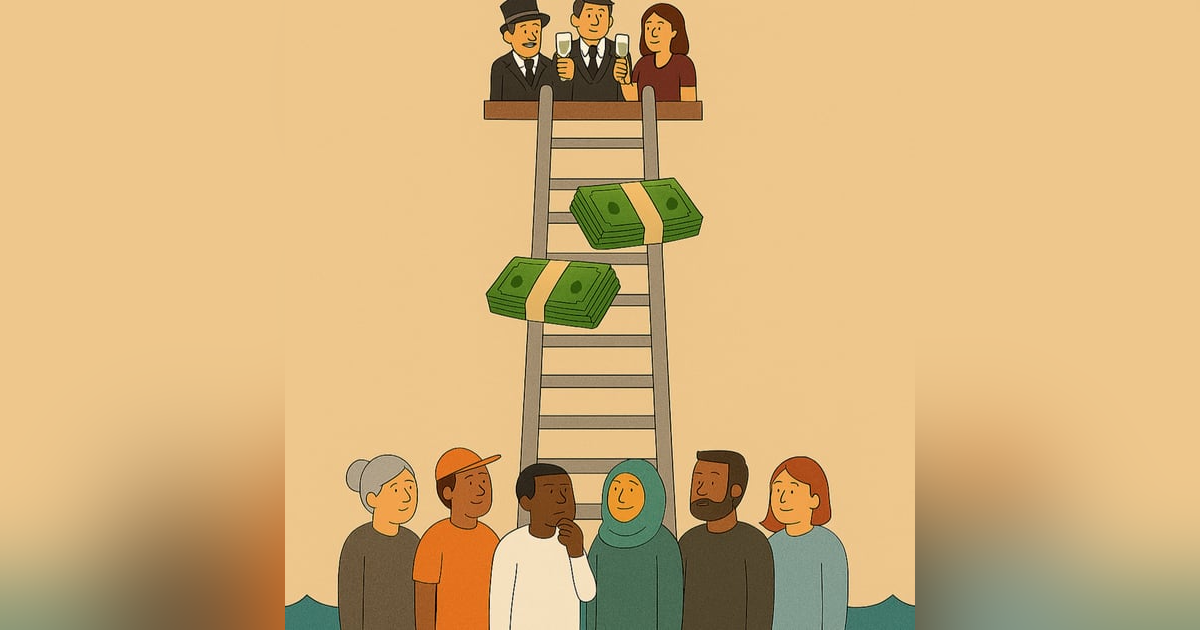
Think about this. This is from chapter 16. In the book caste, Isabel Wilkerson says, "caste puts the richest and most powerful of the dominant caste at a remove in the penthouse of a mythical high rise and everyone else in descending order on the floors beneath them. It consigns people in the subordinate caste to the basement amid the flaws in the foundation and the cracks in the stonework that it appears others choose not to see.
When those in the basement begin rising to the floors above them, surveillance begins. The whole building is [00:16:00] threatened. Thus, caste can pit the basement dwellers against themselves. In a flooding basement, creating an illusion, a panic even that their only competition is one another. It can lead those down under to absorb into their identities, the conditions of their entrapment, and to do whatever it takes to distinguish themselves as superior to others in their group.
To be first among the lowest, the stigmatized stratify their own.
Historically, the caste system has granted privileges to some in the subordinated group with the use of a toxic tool of caste known as colorism among marginalized Americans. The closer they have been to the dominant caste in skin color and in hair and facial features, the higher on the scale they have generally ranked the women in particular, and the more value attached to them by those who [00:17:00] appearance is further from the caste driven ideal.
This distortion in human value is especially insidious in America, owing to the historic means by which most African Americans acquired their range in color and facial features.
With few other outlets for control and power, people on the bottom rung may put down others of their own caste to lift themselves up in the eyes of the dominant. They may feel more deeply wounded and deprived personally when someone of their shared lower rank rises or pushes past them than when the already chosen.
Move ahead. When someone from the already favorite group moves up, it can seem preordained in line with expectations more easily accepted because this is how things have always been. Those in the dominant caste were above ground anyway. The rise of a favored person, the rise of a favored person can seem less a [00:18:00] commentary on you or your own deficiencies.
Then the reflection, then a reflection of the way the world is. The caste system thrives on dissension and inequality, envy in false rivalry, envy, in false rivalries that build up in a world of perceived scarcity. As people elbow for position, the greatest tensions arise between those adjacent to one another up and down the ladder.
If there are anxieties at the top, so much more so at the bottom. Even as others in the lowest caste try to escape the basement, those left behind can tug at the ones trying to rise. Marginalized people across the world, including African Americans, call this phenomenon crabs in a barrel.
But this universal impulse may not always be caused by rank envy. A group already under siege may feel that the team just cannot afford losing any member. If a certain member of the group starts climbing up by [00:19:00] doing better in life, the sheer fear of the individual's exit pushes everyone to pull him down.
Success in the American caste system requires some level of skill at decoding the preexisting order and responding to its dictates. The caste system instructs us all as to whose lives and opinions should bear the most weight and take precedence in most any encounter. One of its teachers is the criminal justice system, which descends from the criminal codes of the slavery era.
Many cases of mistreatment of people in the lowest caste occur at the hands of those in their same caste.
In a caste context, the two main political parties bear the advantages and burdens of the caste they most attract and with which they are associated. At times the stigma and double standard attached to disfavored, minorities have accrued to the Democrats while the privilege and latitude accorded the dominant caste has accrued to the [00:20:00] Republicans who have come to be seen as proxies for white America.
This in part explains the unforgiving scrutiny in obstructions faced by Democrats like Barack Obama, Hillary Clinton, and before them, John Kerry and Al Gore. As white support has intensified for Republicans now seen as the party of an anxious but powerful, dominant class electorate caste gives insights too into the Democrats wistful yearning for white working class voters that they believe should respond in higher numbers to their kitchen table appeals.
While some people on the left keep asking why or why were these people voting against their own interests? The questioners on the left were unseeing, and yet so certain. What they had not considered was that the people voting this way were in fact voting their interests, maintaining the caste system as it had always been, was in their interest, [00:21:00] and some were willing to accept short-term discomfort, forego health insurance risk, contamination of the water and air, and even die to protect their long-term interests in the hierarchy as they had known it.
When you are caught in the caste system, you will likely do whatever it takes to survive in it. If you are insecurely situated somewhere in the middle, below the very top, but above the very bottom, you may distance yourself from the bottom and hold up barriers against those you see as below you to protect your own position.
You will emphasize the inherited characteristics that rank higher on the caste scale. In the voting booth, many people make an autonomic subconscious assessment of their station. Their needs and wishes and multiple identities they carry working class, middle class, rich, poor, white, black, male, female, Asian, Latino.[00:22:00]
They often align themselves not with those whose plight they may share. But with those whose power and privilege intersect with a trait of their own, people with overlapping self-interest will often gravitate towards the personal characteristic that accords them the most status.
Many make an existential aspirational choice. They vote up rather than across and usually not down. They believe they know who will protect the interest of the trait that gives them the most status and that matters most to them." And then she goes on to talk about the 2016 election and how people. We thought were voting against their interests when they were actually voting for what interests them the most themselves.
I mean, this book is fantastic. If you haven't read this book, please do caste by Isabelle Wilkerson. It's phenomenal. It really is. She says, for the Republicans the singularity of focus, the sense of rallying around an [00:23:00] existential threat combined with the inherent caste advantages of the collective wealth and influence of its voters overall gives the GOPA seeming advantage in firing up its supporters against democratic opposition for their part.
Democrats constitute a diffuse majority of the electorate, but seem at times lukewarm toward a base that the party has often lectured to or taken for granted. Chided, if ever there is lower than expected turnout despite voter suppression, sadly buying into caste assumptions rather than bolstering their most loyal voters.
As do the Republicans with theirs, Democrats expend energy and weaken their power pining for the die hard voters of their opponents, the homecoming queens of the electorate, while taking for granted the majority that they already have.
And finally she says, as the most loyal voters of [00:24:00] their respective parties, white evangelicals are to Republicans. What African Americans are to Democrats, though each makes up a minority of the total electorate, but the foremost concerns of the Democrats. Most reliable voting block, affordable housing, clean water, police brutality, the racial wealth gap and reparations for state sanctioned discrimination as has been accorded, other groups discriminated against in the United States have remained on the back burner or have even been considered radioactive issues for the party that African Americans help to sustain to those who say that this would be impractical.
It would be the duty of the party representing and dependent on the subordinate caste to open the eyes of their fellow Americans and make the case for a more egalitarian country.
Meanwhile, the priorities of white evangelicals ending abortion, restricting immigration, protecting gun rights, limiting government, [00:25:00] and more recently, the disdain for science and the denial of climate change have become the menu of belief systems for the Republican party.
People identifying as white evangelicals, regardless of their personal religiosity, rallied around Trump to defend a white Protestant nation. They have proven to be loyal foot soldiers in the battle against undocumented immigrants and Muslims. The triumph of gay rights, the persistence of legal abortion and the election of Barack Obama signaled to them a need to fight for the America they once knew.
Why the hell am I talking about all of this? Because right now the US government is shut down because the ACA still makes Americans who are poor and have low income pay for health insurance.
And so the ACA provides subsidies. The subsidies were initiated in 2021, and then they were renewed in 2023, and they were set to expire. [00:26:00] Obviously, the Democrats knew this but. The Democrats believed that they would have the House and the Senate and the presidency, and that these subsidies would either be made permanent or renewed for another two years and then renewed again.
But they miscalculated, didn't they? They didn't know that people would be so disillusioned with politics and government and politicians that many of them would stay home and not vote, or that some people would decide, Hey, you know what? It's in my best interest to align with the values of the highest caste, and if I do that, then I'm gonna be like them.
Then I'm gonna get myself out of this hole.
So a lot more people voted Republican. They voted for Donald Trump. They actually voted in their interest because it is in their interest to be like that guy. To be like the people who look like him to be wealthy and white and on top of the world. Yeah, the [00:27:00] blacks, the Latinos, a lot more black people did, certainly a lot more Latinos did.
Still a lot voted Democrat, but more voted Republican. And then more people stayed home, which made for a perfect storm in which the Democrats ended up without the house, without the Senate, and obviously without the presidency. And so now we're in a fight to reopen the government because the Republican party wants to pass an appropriations bill that does not contain these subsidies.
They don't give a fuck that you would have to pay more money for your insurance premium. They don't even give a fuck that. I have to pay more money every year for my insurance premium. The Democrats don't really care either. But that's another story. But they want these ACA subsidies to expire because ever since the ACA was passed, they have been slowly chipping away at it.
Lawsuits. They even took it to the Supreme Court about the mandate. They've tried to have it overturned. They've tried to pass legislation to superseded, [00:28:00] they've tried to pass their own plan. They've tried to come up with their own plans and again, not only have they failed, but now in order to get more Americans, American voters on their side in their argument that the ACA should go away, they've decided to make it seem as though the ACA is paying. For health insurance for, undocumented immigrants that under the ACA, undocumented immigrants are receiving health insurance, medical coverage when they are, in fact not.
You cannot get an insurance plan on the insurance marketplace if you are an undocumented immigrant. That's number one. Number two, if a person, no matter who they are, where they are from, and this is the case in other countries too, they go into an emergency room and emergency department and they're having a medical emergency.
They must be seen and treated. So if an undocumented [00:29:00] person goes into an emergency room, this is the law in the United States. If an undocumented person goes into an emergency room and they're bleeding profusely internally, externally, they have to be seen and treated. They don't get to be asked if they're a citizen.
They don't get to be asked, Hey, how you gonna pay for this? They have to be treated. The same is for an American citizen, by the way. But do you know also that if you, an American citizen was visiting, say Canada or Ireland or Scotland or England, and you had a medical emergency and had to go to a hospital, you would have to be seen.
They would treat you and in some cases they might waive the damn bill. Or in some cases the bill is so low. You might only have to pay like 20 bucks, a hundred bucks. Did you know that? Did you know that? I don't think a lot of people know that. I don't think people know that. I think people are very upset that someone [00:30:00] who doesn't speak English might actually get to have a doctor who works in the United States touch all over their body.
Oh, oh my god. No, but the lie that's being told so that people will get on board with removing these subsidies and get on board with removing the ACA ultimately defunding the ACA ultimately is that illegals are receiving medical insurance under the ACA. No, they aren't. But me sitting here telling you this, I can even point you in the direction of.
Articles and people who work with plans on the healthcare exchange. People who certify plans under the ACA who will tell you, no, they don't. And people would still tell me that I'm lying. People would still tell me that I'm fucking lying. Because you want so much to believe that these people who don't look like you, who you think, who you other, these others who are on the bottom with you, [00:31:00] are taking money out of your pockets or taking your taxpayer dollars.
You're so wanting to believe that they would do it, that the truth doesn't even occur to you. It doesn't even occur to you that this might not be true. It doesn't even occur to you that the opinion you hold actually is based on false information. See, opinions without thought, opinions without thought.
I don't want my tax dollars going to people's health insurance. I don't want my tax dollars going to feed people who don't wanna work. I don't want my tax dollars going to, going to help people. I don't want my tax dollars going to give people, uh, lunch at school. I don't want my tax, I don't want my tax, I don't want my tax, I don't want, and just blathering on about what they don't want their tax dollars going to pay for.
You don't want people to be fed. You don't want people to have medical treatment. And keep in mind that these are. People who don't have as much as you. Although I know, believe me, I've heard this story before. I should qualify for food stamps, but they [00:32:00] wouldn't let me have stamps. They told me no. So now you don't want anybody to have 'em.
Morally, it makes no sense. Ethically, it makes no sense. And you don't even have to have a religion of faith to have morals and ethics. You don't. Moral and ethics supersede came way before religion, long before there was any organized religion, any faith. There were morals and they were ethics.
So this isn't even about believing in God. This is just about who you are as a person. I've had, I've heard this argument so much. I mean, especially on X, which is just a cesspool of inhumane personalities. And I don't want my checks dollars paying for them illegals, and for people to get abortions. In India, but this is how we're duking it out in this caste system called the United States of America. This is how we're duking it out. Whether it's because we believe resources are scarce, they're not.
By the way, you're [00:33:00] living in what you call the most prosperous nation on earth, the most powerful nation on earth. It don't add up, sir. And ma'ams. It doesn't add up. It can't be that we are a superpower and we also have scarce resources.
Not enough food, not enough water, not enough air. We're all dying, but we are the best country on earth. Dammit. It don't jive. Turkeys. It don't jive.
Could it be that maybe you're just fighting the people because you don't like them? They don't look like you. You don't wanna have to compete with other people. You don't wanna have to compete with people you think are beneath you. You don't wanna have to compete with people you think are beneath you.
The people in the caste are fighting. They're fighting. They're fighting someone, someone wants you to have, uh, lower health insurance premiums and someone doesn't want you to have any health insurance that has anything to do with the government whatsoever.
They don't want you to have Medicaid, they don't want you to have Medicare. [00:34:00] They certainly don't want you to have any kind of discounted health insurance through the ACA. Ew, no. What do you mean me? My tax dollars shouldn't go to help people prepare for their cancer treatment, blah, blah.
And then both sides will swear. Therefore the American people, maybe there's one side that is more for the American people. Maybe that's the Democrats. Maybe. Maybe. But I don't know. Every time, Israel comes to the US government asking for its handout, asking for $50 billion, the Democrats are signing the checks.
So I don't know. And then we see what they do with that money. We see what they do with it. So are the Democrats really on the side of the people? I've got a lot of pushback. I've been cussed out, in fact, which is fine because I cussed too. But, I've gotten a lot of pushback for criticizing Democrats, just criticizing them.
Listen, I'm a lifelong Democrat. I vote Democrat every [00:35:00] election. I also vote in every election. I also vote in all the primaries. I also work in government. I understand bureaucracy. I also study politics in, in college, and I continue to study it. The Democrats have given us a lot of material to criticize them with, but they're not being criticized.
You can criticize them and still vote for them. You criticizing them isn't giving the other party ammunition to use against us. No. It's pointing out where the fault is. In their platform and what they're doing wrong. So maybe if they did something better, they might gain more voters.
The cost of racism [00:36:00] in the United States is a lot. The cost of sexism in the United States is a lot. The cost of misogyny, the cost of classism, very expensive. Black women dying during childbirth life expectancy in the US is lower than other countries, other developed nations.
Infant mortality is high. It's so high in the state of Mississippi that they have declared a public emergency. Infant mortality is so high in the state of Mississippi that they have declared a public emergency.
American students don't do as well on standardized tests as students from other nations. And listen, I'm talking about the superpower. The world superpower with the high, maternal mortality rate, especially for black women.
Third highest, I believe, and incarcerating people in the world. High infant mortality rate, poor educational system. This is your superpower. I listen, I love my [00:37:00] country. I love my country. I love being American. I love it here. God bless America. Oh, see? Can you see? But baby, we got a problem. We got a problem.
We got a a caste problem. It's keeping people from working. It's killing people. It's forcing, people to argue with their neighbors. To call their neighbors, to call police on their neighbors, to welcome, the National Guard into their neighborhoods, to arrest their neighbors, to welcome ice into their neighborhoods to arrest their neighbors, to arrest immigrants.
You want the police to come in and get rid of them because you think, oh, if they're gone, that means I'm safe. That means I'll have more money and more job and more food and more water. A year from now, you're not gonna have more money, more job, more food, more water.
You're not, the presence of people around you doesn't take away from what you have. You will have what you are [00:38:00] meant to have. You will have all the provisions you are meant to have in your life. Nothing that is for you will miss you. Nothing, not even a drop of water. And trying to get rid of people, trying to take health insurance away from people trying to take, um, mothers away from their children, fathers away from their children, having people deported.
It's not going to enhance your life. It's not going to make your life safer. It's not going to enrich your life. You think that having the fucking National Guard march around your neighborhoods is going to make your neighborhoods safer? No, because guess what? A lot of the crime that's happening is happening indoors.
Indoors, yeah. Physical abuse, sexual abuse, drug abuse, drug use, drug manufacturing, white collar crime. But one of the, the, the most common crime in the US is property crime. Burglary, vandalism, uh, [00:39:00] larceny, auto theft, people breaking into your house. National Guard can't fix that because the National Guard, the police law enforcement cannot fix the impulses of people.
As soon as those people leave your neighborhoods, guess what? The crime, the crime will be there because it was never prevented. You want crime to go away, you have to prevent it from happening.
You think stopping someone from carjacking is going to stop carjackings. It's not. You think seeing National Guard March around the streets of Memphis and Chicago and Baltimore is gonna keep criminals from criminalizing? From terrorizing? No. They'll just do it indoors. They'll just find somewhere else to do it.
They're still going to do it because those impulses exist in people. Threatening them with jail doesn't remove the impulse to commit crime. Maybe it removes the opportunity. Some of these crimes are crimes of opportunity. Maybe it removes the opportunity, but other [00:40:00] opportunities will arise. And because the government does not engage in crime pro prevention, the crime rate will be what it is. It'll be what it is. And maybe we should try some crime prevention. Create economic opportunities because public safety and economic opportunities are not separate goals. They are mutually reinforcing. But violence, we know stymies economic growth and there are costs of crime, but there's also cost of classism. There's cost of racism. There's cost of sexism.
Are we doing anything to prevent this? Are we changing people's habits and attitudes? Are we changing societal norms so that these things don't exist at all? Are we removing the caste system that keeps Americans divided? No, we're just deepening them. No, we're deepening them. We're making them wider.
We're [00:41:00] adding more floors. We're adding more floors to that building before you get to the basement. We're adding more class fights.
Republicans run on class fights, by the way, and they have created a large one. They've created a large one. Now they've pitted black people against immigrants. For what? For what? The wealthy whites are not going to give you a fucking piece of what they have.
They are not going to do it. They ain't no trickle down, nothing. It's not gonna trickle down. They don't care if you have nothing. They will keep you from having what they have. They will keep you from having even a percentage of what they have. If it means they get to have more.
The problem is people put their eggs in the baskets of these politicians, and then they go on about their business. They don't hold these people accountable. They don't make sure that they are responsible for the job that they're doing, for the votes that they're taking, for the laws that they're passing, for the way they enforce the [00:42:00] laws, for their interpretation of the laws.
We're not holding these people accountable.
We're afraid to criticize them. We're afraid to speak out against them. We're afraid to call them to account for the choices they're making, but we'll do it to each other every day.
Am I a huge fan of all the Democratic, uh, politicians? No ma'am. No? Mm-hmm. Am I still voting for her? Yeah. Am I excited about the future? I don't even know, man, at this point. I don't even know. I have no idea. What did the, what does the future look like? I couldn't even tell you. No idea. Seems pretty bleak to me because this caste system is just getting bigger and people are fighting against, against each other even more. And we don't even realize that we're being pitted against each other and, and that we're being exploited and, and used, as plays for politicians. And we're okay with it. We're just propping them up and going.
Way to go. [00:43:00] Attaboy you go. Yes. Get rid of them. Immigrants, yes. Get them. Gazing them. Trans outta here. Get the yes, get them. Federal employees outta here. We don't need that. We don't need nobody. We just need the white man. The all powerful white man who's in power, who's taking all the money and all the power, and he's buying gold, uh, filigrees for a golden ballroom at the White House.
What?
Why are you people not challenging this man on the way he's spending the money? But then he comes to you and tell you, tells you that the country is running outta money and that the government is running outta money and it's too big and there's all this wasteful spending. And then you see this dude on TV wasting your money every day and you're just like, look at him.
Mm, just so proud. Just so proud. That doesn't make sense.
But like Bell Hooks says in her book, where we stand, to work for change, we need to know where we [00:44:00] stand. And so I ask you, where do you stand?
Is this really a nation for the people of the people by the people? Or is it a nation just for a few people? Of a few people by a few people
our laws and economic systems favor capital over labor. We associate cultural cultures that matter with virtue, competence, and patriotism, and then we associate poverty with laziness and moral failure.
Elected officials overwhelmingly are drawn from upper income and professional classes, and they're the ones shaping the legislation through their own worldview and interest, and their worldview is very narrow and their interests are also very narrow, but involve mostly protecting their profits and their class people who look like them specifically.
The US has experienced a, historic concentration of [00:45:00] wealth over the last four decades. The top 10% of Americans own nearly 70% of national wealth while the bottom half owns less than 3%, and we're at the bottom fighting each other, hoping that the top 10% will dump their bucket of money on top of our heads
Let's be clear, caste is not about income or education. It's about inherited status. Who is seen as inherently worthy and who is not? And in the United States, caste has always been racialized. From the founding of the Republic to today's campaign, ads, politics has been a tool for maintaining this order
isabelle Wilkerson distinguishes caste from race by describing caste as the bones of inequality. While race is the skin race may change its language. For instance, black, African-American, [00:46:00] Latino, indigenous. But caste remains constant. A rigid hierarchy that places whiteness at the top and blackness at the bottom with other groups stratified in between.
This framework helps explain why racial disparities persist even when economic conditions improve. A wealthy black man may still be profiled by police. A college educated Latina may still be underpaid. caste is not about individual achievement at all. It's about inherited status and systemic positioning.
in America. caste isn't just a relic of slavery or segregation, it's a living system. It's the invisible scaffolding that determines who gets protected, who gets punished, and who gets heard. And while political parties claim to represent our values, they often serve as architects of this hierarchy. Every election season we're told that political parties are fighting for our [00:47:00] future.
But what if they are also fighting to preserve the past?
American law has long served as a tool of caste enforcement. Consider Jim Crow laws redlining and felony disenfranchisement. Even seemingly neutral policies often have caste coded outcomes. School funding formulas tied to property taxes, such as in the state of Ohio where I live, ensure that wealthy white districts receive more resources and they do.
Environmental regulations are more strictly enforced in affluent areas, and healthcare access is stratified by geography, race and immigration status, and therefore health determinant outcomes shift in favor of the wealthy and white.
Caste is not merely a social phenomenon. It is a political technology. It operates through laws, customs, institutions, and ideologies that assign human value and distribute power in the [00:48:00] United States. caste has been embedded in the architecture of governance, shaping who gets to vote, who gets protected, and who gets punished.
While classism often masquerades as economic logic, caste is a deeper logic of exclusion, one that transcends income and education to define belonging itself.
In the United States, we're taught to see class as a ladder, something you climb with grit. Education and hard work. But what if the latter itself is rigged? What if some people are born at the top, others at the bottom, and the rungs between are illusions. Like the example Isabelle Wilkerson gives in her book of the lower caste being in a flooded basement. This is the reality of caste in the United States, not the caste of India, of course, but a distinctly American version one that assigns [00:49:00] human value based on race. Ancestry and proximity to power.
It's a system that's older than our constitution and more enduring than any election cycle, and it's hiding in plain sight. Political parties and ideologies don't just reflect our values. They shape the architecture of caste. From the founding of the Republic to today's polarized landscape, both major parties have played roles in maintaining and challenging this hierarchy.
The question isn't which party is better. The question is who benefits from the status quo? Take education funding, for instance. In states like Ohio School budgets are tied to property taxes, which means wealthy, predominantly white districts thrive while poor black and brown communities are left behind.
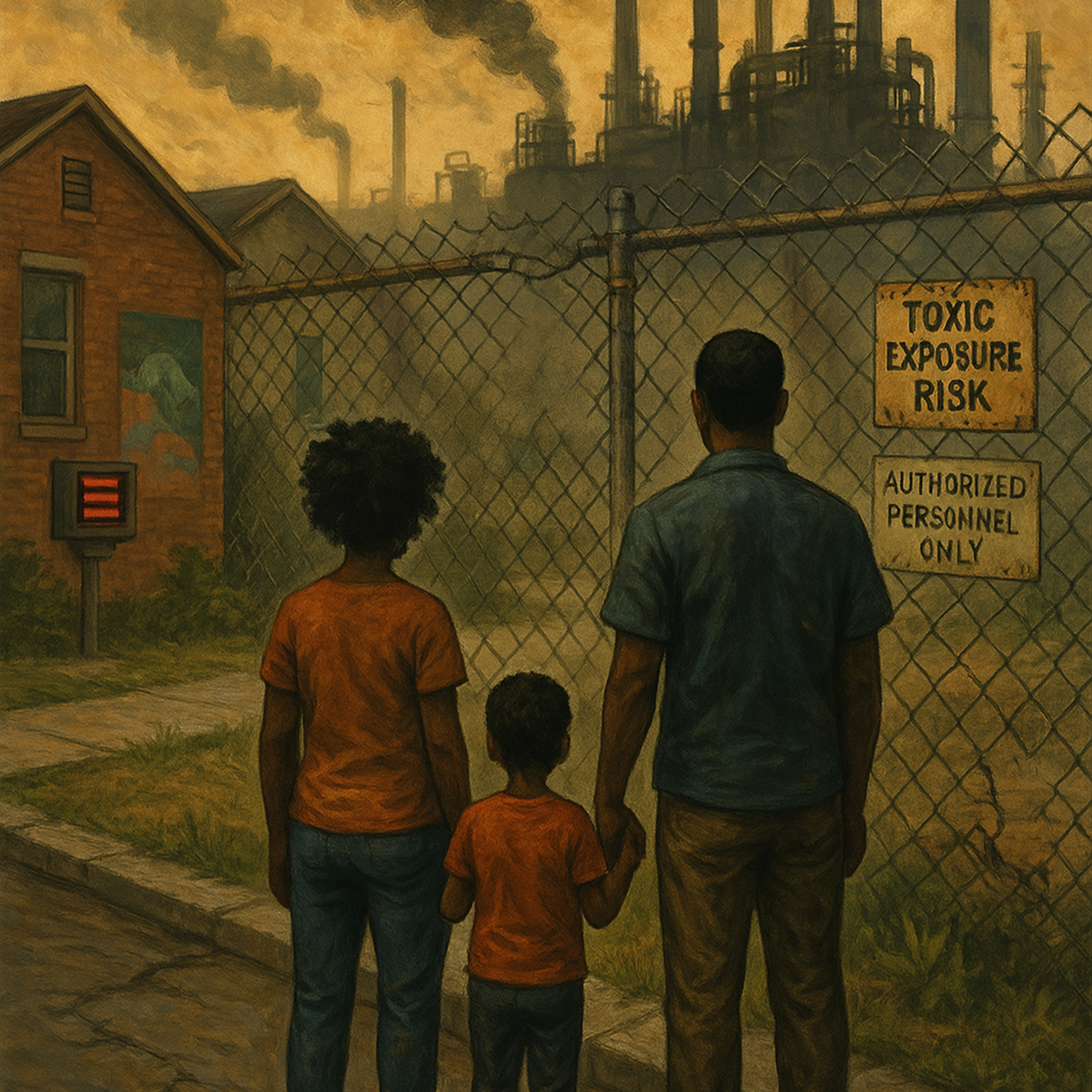
This isn't classism, it's caste. It's a system designed to keep certain children in crumbling schools while others learn in gleaming [00:50:00] facilities with AP courses and robotics labs or look at environmental justice. Communities of color are disproportionately exposed to pollution, toxic waste, and climate disasters.
Zoning laws, industrial siting, and decades of disinvestment have created sacrifice zones. These are places where people are treated as disposable. Political debates about regulation or economic growth often ignore the human cost. And with healthcare like we're seeing now in the Senate over the ACA and health insurance premium subsidies, it's the same story.
States that refuse to expand Medicaid under the ACA left millions, uninsured, many of them poor, rural, and black. The ideological battle over b government masked a deeper truth. Who deserves to live with dignity and who [00:51:00] doesn't. Even Public safety is caste coded law and order rhetoric has long been used to justify over policing in black neighborhoods while under policing white collar crime.
The criminalization of poverty, addiction, and mental illness isn't just policy. It's a moral judgment about whose pain matters. And these aren't isolated issues. They're symptoms of a deeper disease. And as Isabelle Wilkerson writes, caste is the bones. Race is the skin, caste is the bones, race is the skin.
And politics is the bloodstream carrying the nutrients that sustain the system or the antibodies that fight it.
This isn't just about policy. It's about power. Political parties are not neutral. They are shaped by who votes, who donates and who is deemed electable. And [00:52:00] too often that means centering the comfort of the caste, protected over the liberation of the caste oppressed.
So what do we do? We name it. We stop pretending it doesn't exist. We stop pretending that America is a pure meritocracy and start acknowledging the invisible scaffolding of caste. We push political parties to move beyond symbolic gestures and enact structural change. We support candidates and movements that center equity, not just efficiency. We listen to those most affected the black indigenous immigrant and working class communities that have been resisting caste for centuries. Their stories, strategies and solutions must lead the way. And we vote not just for individuals, but for ideas, for policies that redistribute power, repair, harm, and reimagine what democracy can be.
We need to, every [00:53:00] once in a while reexamine where we stand.
Because until we dismantle caste, we're not climbing a ladder. We're just reenacting a script.
And this has been Ayana, explains it all brought to you by facts, figures, and enlightenment. Take care